Botox for TMJ and Masseter Botox: What It Can (and Can't) Do
Botox in the jaw muscles can ease clenching and grinding and slim a square jawline. Here's how it works, what the evidence supports, and what to expect from treatment.
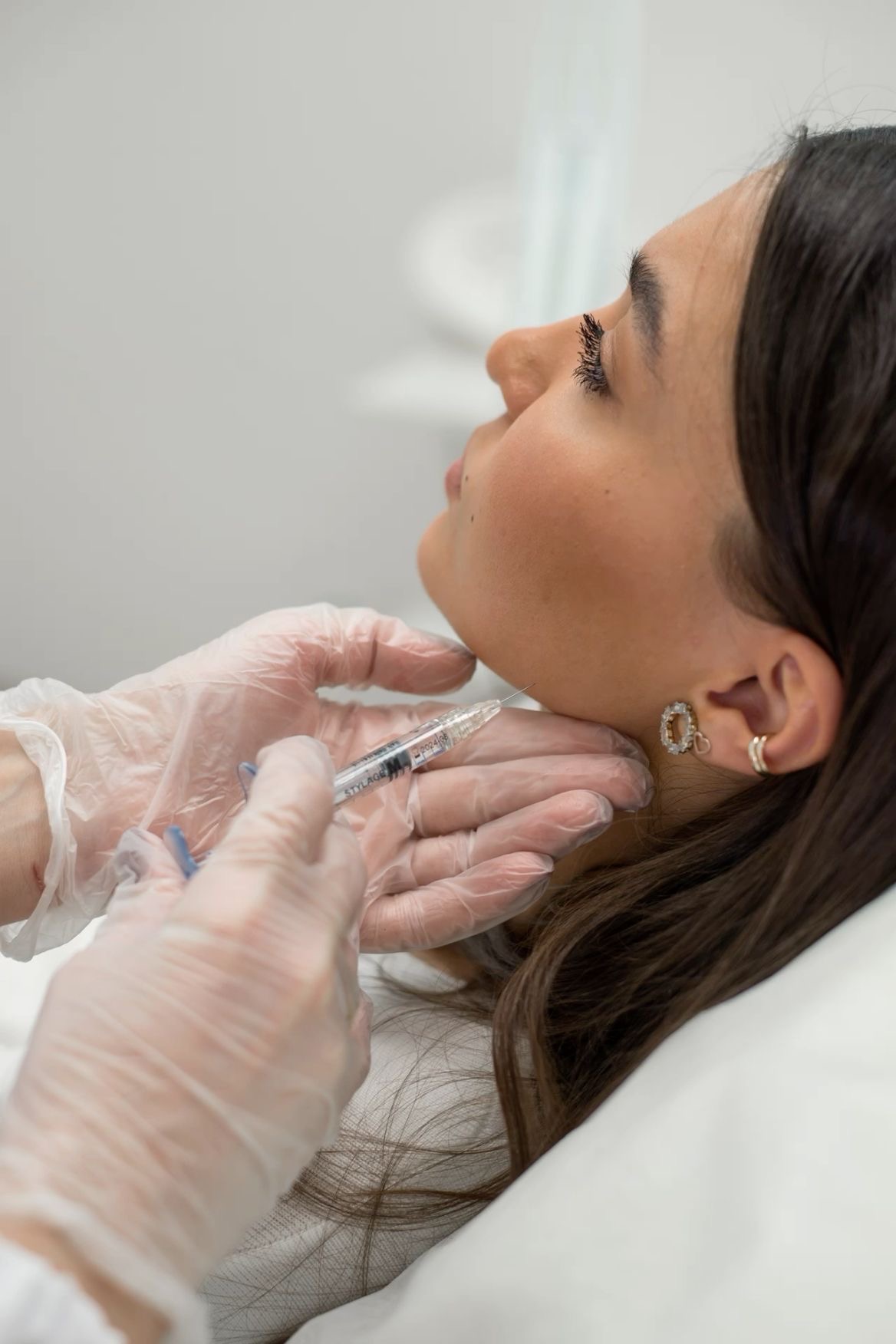
- Masseter Botox relaxes the main chewing muscle, easing clenching-related jaw tension and slimming the lower face.
- Using Botox for TMJ is off-label; it helps muscle-driven pain best, not problems inside the joint itself.
- Tension relief starts in 1–2 weeks; visible slimming builds over 6–8 weeks and lasts about 4–6 months.
- A typical treatment uses roughly 20–30 units per side; at $11.50 a unit that's about $460–$690.
If you wake up with a sore jaw, catch yourself clenching at your desk, or have a dentist pointing out worn teeth, the problem is often a muscle you can feel by pressing your back teeth together: the masseter. Relaxing it with a small amount of botulinum toxin is one of the most requested off-label treatments we do at Aurelia, both for comfort and for its side effect of a softer, slimmer jawline. Here's what it really does, and where its limits are.
What "TMJ" actually means
TMJ is the temporomandibular joint, the hinge in front of each ear that connects your jaw to your skull. When people say they "have TMJ" they usually mean a temporomandibular disorder (TMD): pain, clicking, stiffness or headaches around the jaw.
TMD has several possible causes. Some cases are muscular: overworked chewing muscles from clenching, grinding (bruxism) or stress. Others come from inside the joint: a displaced disc, arthritis or injury. That difference matters, because Botox works on muscles, not on the joint.
How Botox for TMJ and clenching works
The masseter is one of the strongest muscles in the body for its size. In habitual clenchers it can be working for hours a day, and often all night. Injecting botulinum toxin into it reduces how hard it can contract, without stopping you from chewing, talking or smiling normally.
Less force means less strain on the muscle, the joint and the teeth. Patients typically describe less morning jaw ache, fewer tension headaches around the temples, and a jaw that finally feels like it can rest. Some injectors also treat the temporalis muscle at the temple when headaches are a big part of the picture.
What the evidence says
Botox is not FDA-approved for TMD or bruxism; using it for the jaw is an off-label use, which is common and legal in medicine but worth knowing. Clinical studies on jaw pain show mixed results: the clearest benefit is for muscle-related pain and clenching, while there's little reason to expect it to fix a displaced disc or arthritis.
That's why we recommend seeing your dentist first if you have jaw pain, clicking with locking, or trouble opening your mouth. A night guard protects your teeth either way, and Botox works well alongside one rather than as a replacement for a proper diagnosis.
Masseter Botox for jaw slimming
Muscles that work hard get bigger, and a muscular masseter gives the lower face a wide, square shape. When Botox relaxes it, the muscle gradually slims down from lack of use, softening the angle of the jaw into a more tapered, V-shaped contour.
This change is slower than the anti-wrinkle effect. You'll feel less tension within a week or two, but the visible slimming builds over six to eight weeks and keeps improving with repeat treatments. It works best when the width really is muscle; if the fullness comes from fat or loose skin along the jawline, other treatments do the job better (more on that below).
How many units, and what it costs
Dosing depends on the size and strength of your muscles. A common starting point is around 20–30 units per side, with larger doses for very strong clenchers. We palpate the muscle while you clench and map the injection points to its bulkiest part.
At Aurelia, Botox is $11.50 per unit, so a typical 40–60 unit masseter treatment comes to about $460–$690. Dysport ($4 per unit) is an alternative; it is dosed in different units, so we quote the full treatment price either way. See our Botox cost guide for other areas.
Timeline and how long results last
Week 1–2: jaw tension and clenching ease. Chewing very tough foods can feel tiring for a few weeks, which is normal and fades.
Weeks 6–8: visible slimming reaches its peak.
Months 4–6: strength slowly returns. Because the masseter takes a larger dose and gets smaller over time, results here often outlast forehead or frown-line Botox. Many patients space visits further apart after the first year. Read more in how long Botox lasts.
Side effects to know about
Most side effects are mild: tenderness or small bruises at the injection sites and a few weeks of chewing fatigue. Less commonly, product that spreads into a nearby smile muscle can cause a slightly uneven smile for a few weeks, and over-treating can leave a hollow just below the cheekbone. Both come down to injector anatomy and dosing, which is why this treatment should be done by an experienced medical injector.
Botulinum toxin isn't suitable during pregnancy or breastfeeding, or for people with certain neuromuscular conditions. We go through your medical history at the consultation.
Who is a good candidate, and the alternatives
You're likely a good fit if you clench or grind, wake with jaw tension, or have a wide, muscular lower face you'd like to soften, and a dentist has ruled out a joint problem that needs other care.
Not ready for injections, or want to add to them? Our Buccal Sculpt Ritual releases the masseter and deeper jaw muscles by hand, from inside the mouth, and many clenchers use it between Botox visits; our buccal massage guide explains how it works. If the goal is a sharper, lifted jawline rather than a slimmer one, the TopOval Jaw Sculpt combines PDO threads, filler and neurotoxin in one plan.
Frequently asked questions
Is Botox for TMJ covered by insurance?+
Usually not. Because using Botox for TMD is off-label and the jaw treatment is often partly cosmetic, most insurance plans don't cover it. Aurelia offers financing through Cherry and CareCredit.
How many units of Botox are needed for the masseter?+
Commonly around 20–30 units per side, so 40–60 units in total, adjusted to the size and strength of your muscles.
Will masseter Botox change my smile or chewing?+
You'll chew normally, though very tough foods can feel tiring for a few weeks. A changed smile is uncommon and temporary; careful placement away from the smile muscles avoids it.
How long does masseter Botox last?+
Usually 4–6 months. With repeat treatments the muscle gets smaller, and many patients can leave longer gaps between appointments.
Can Botox fix jaw clicking?+
Not usually. Clicking typically comes from the disc inside the joint, which Botox doesn't treat. It can ease the muscle tension that often accompanies it; see a dentist about the clicking itself.
Ready to take the next step? Explore the treatment and book at our North Miami (Biscayne Blvd) or Palm Beach Gardens (Northlake Blvd) clinic:
This article is informed by guidance from independent medical authorities. Always consult a licensed provider for advice specific to you.
- TMD (temporomandibular disorders) — National Institute of Dental and Craniofacial Research
- Botulinum toxin — what to expect — American Society of Plastic Surgeons
- Botox (onabotulinumtoxinA) — medication guide — MedlinePlus, U.S. National Library of Medicine
Aurelia's clinical content is written and reviewed by the practice's medical team, led by a board-certified injector recognized among the Top 100 in the USA.
- Top 100Injector-led clinical team — recognized among the Top 100 Injectors in the USA
- Board-certifiedFNP-C medical oversight on every treatment plan
- Since 2016Two South Florida clinics — North Miami & Palm Beach Gardens
- 5.0★From 217 verified patient reviews
- FDA-approvedInjectables, plus medical-grade, clinically studied devices