CO2 Laser Recovery Day by Day: What to Expect
What does CO2 laser recovery really look like? An honest day-by-day timeline — from the first night's heat and swelling to peeling, fading redness and final collagen results.
- CO2 laser recovery follows a predictable arc: heat and swelling on days 0–1, oozing and crusting on days 2–4, then peeling and new pink skin around days 5–7.
- Lighter settings typically mean 2–5 days of visible healing; deeper resurfacing up to 7–10 days, with pinkness that can linger for several weeks.
- Collagen keeps remodeling for 3–6 months, so your final result arrives well after the redness has faded.
- Strict sun protection is non-negotiable in Florida — we usually schedule CO2 courses October–March, and Fotona 4D (from $1,200 per session) is the minimal-downtime alternative.
If you've booked — or are seriously considering — fractional CO2 resurfacing, the question that matters most isn't how the laser works. It's what the next two weeks of your life will look like. CO2 laser recovery involves real downtime, and the patients who feel best about the process are the ones who knew exactly what to expect before they started. This guide walks through recovery day by day, from the first evening to the final result months later, along with how to prepare, the aftercare that matters most, why sun protection is critical in South Florida, and the signs that mean you should call us. Every face heals a little differently and the depth of your treatment changes the timeline, so treat this as a general map — your provider's written instructions always come first.
Before your treatment: how to prepare
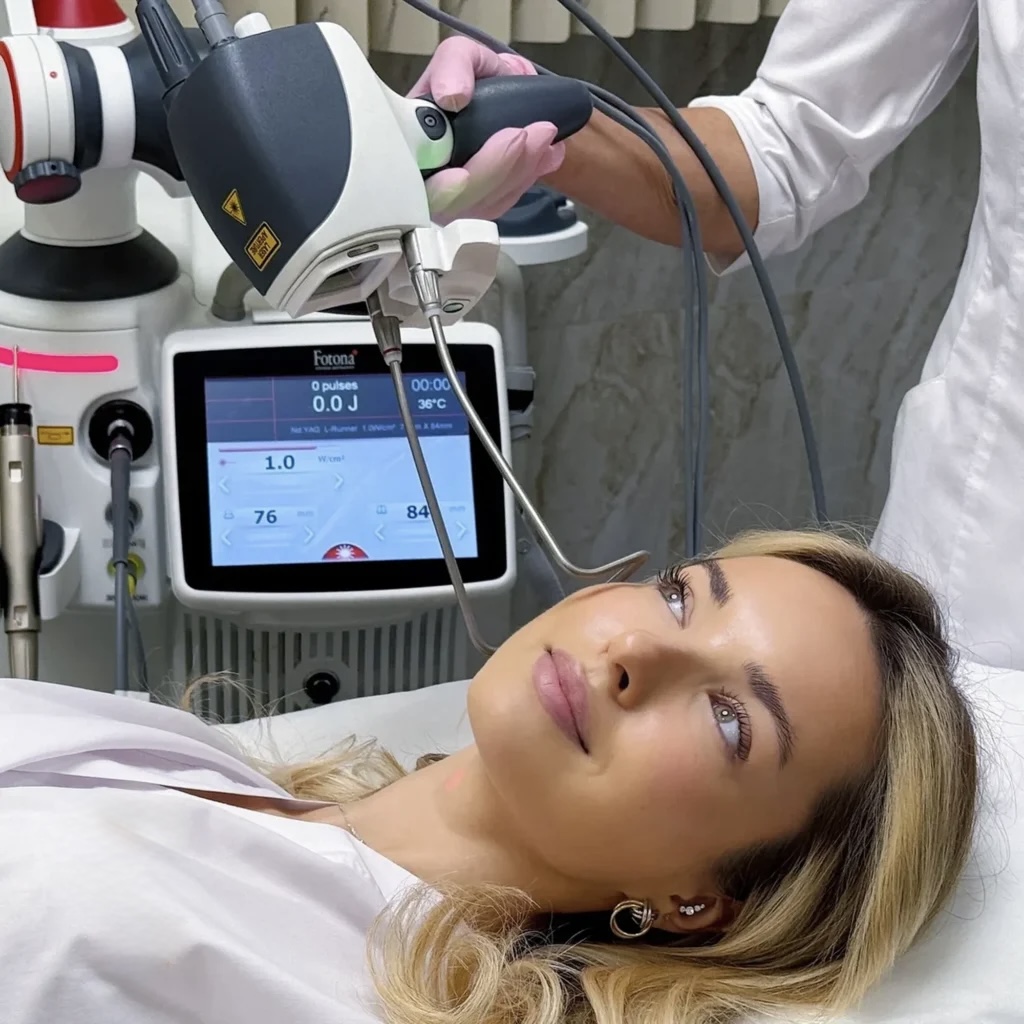
Good recovery starts before the laser touches your skin. At your consultation for Fotona CO₂ laser resurfacing, we review your skin type, medical history, medications and goals, then choose a depth and density that balance the result you want against the downtime you can realistically take. As a rule of thumb, lighter settings mean about 2–5 days of redness and pinpoint scabbing, while deeper resurfacing can mean 7–10 days of visible healing.
Depending on your skin and history, preparation commonly includes strict sun avoidance and no self-tanner in the weeks beforehand, pausing retinoids and exfoliating acids for the period your provider specifies, and telling us about any history of cold sores, since providers commonly prescribe a preventive antiviral before resurfacing. Have your recommended ointment and cleanser ready at home, and clear your calendar for at least the first week. Never stop a prescribed medication on your own — we'll tell you if anything needs adjusting.
Days 0–4: heat, swelling, oozing and crusting
Day 0–1. The treatment takes 30–60 minutes, after roughly 30 minutes of topical numbing, and most patients feel warmth and a prickly heat during the passes. Afterward, your skin will feel like a significant sunburn — hot, tight and red — for the rest of the day, and pinpoint bleeding or clear fluid is normal after deeper settings. Swelling tends to build over the first day or two and is often most noticeable around the eyes and jaw. Sleep with your head elevated, use cool (not icy) compresses only as directed, and keep your hands off your face. This is usually the least comfortable stretch, and it passes quickly.
Days 2–4. The treated skin begins to weep clear or yellow-tinged fluid and form a fine crust or bronzed, sandpaper-like layer as it rebuilds. It looks dramatic, but it's expected, and swelling usually starts to ease. This is where aftercare matters most: cleanse gently as often as your provider instructs, pat — never rub — dry, and reapply a thin, continuous layer of ointment so the skin never dries out and cracks. Skip makeup, active skincare, fragrance and anything that stings. Mild itching can begin now; let us know rather than scratching.
Day 5 to week 4: peeling, pink skin and makeup
Days 5–7. The crusted layer starts to flake and peel, revealing smooth, distinctly pink new skin underneath. It's tempting to help it along — don't. Picking risks scarring and pigment changes, so let it shed on its own schedule while you keep it moisturized. After lighter treatments, much of the visible healing may already be finished; after deeper resurfacing, most people feel ready to be out and about again somewhere in the 7–10 day range, once the surface has fully closed. Your provider will tell you when to switch from ointment to a gentle moisturizer and when to start mineral sunscreen.
Weeks 2–4. The new skin stays pink for a while, and that's normal. After deeper treatments, redness can linger for several weeks while it gradually fades toward your natural tone; lighter treatments fade faster. Once you're cleared, most patients can wear mineral makeup to soften residual pinkness. Keep your routine short and gentle — cleanser, moisturizer, sunscreen — reintroduce retinoids or acids only when told, and hold off on intense workouts, saunas, pools and the ocean until you've had the go-ahead.
Months 1–3: collagen and your final result
Here's the part many patients don't expect: your results keep improving long after the redness is gone. The CO2 laser deliberately triggers a wound-healing response, and collagen and elastin continue to remodel for three to six months after treatment. Texture softens, fine lines smooth, and skin looks firmer and more even as the weeks pass. Depending on the concern, some patients reach their goal in one session while deeper scarring or sun damage may call for a short series, followed by annual maintenance. You can browse real before-and-after results from our clinics to see how outcomes develop over time.
Aftercare do's and don'ts, sun protection and when to call
Do follow your written instructions exactly, keep the skin moisturized, sleep elevated for the first nights and keep every follow-up appointment. Don't pick, scrub or peel; use retinoids, acids or fragranced products until cleared; or exercise hard, swim or use a sauna before you've been given the go-ahead.
In South Florida, sun protection deserves special emphasis. Freshly resurfaced skin is highly vulnerable to UV, and sun exposure during healing is a major driver of post-inflammatory hyperpigmentation — dark patches that can take months to fade. Once your provider clears you, use a broad-spectrum SPF 30 or higher every day, reapply when you're outdoors, and add a wide-brimmed hat and shade; the American Academy of Dermatology's sun protection guidance is a good standard to follow. Plan on strict protection for months, not weeks.
Call us promptly if you notice pain, warmth or swelling that increases after the first few days, pus, a foul smell, honey-colored crusts, fever, clusters of small blisters or new sores, or areas that stay raw longer than expected. Raised or thickening areas and darkening patches as the skin heals are also worth a call. When in doubt, reach out — and if anything feels like an emergency, seek urgent medical care.
Who is — and isn't — a good candidate
CO2 resurfacing suits people with wrinkles, acne scarring, sun-damaged texture or enlarged pores who are in good general health and can take time off and avoid the sun while they heal. It may not be right if you're pregnant or breastfeeding, have an active skin infection or cold sore outbreak, have recently taken isotretinoin, tend to form keloid or raised scars, or have a condition that affects wound healing. We review all of this at consultation.
Skin tone deserves an honest word. Ablative lasers carry a higher risk of pigment changes — both darkening and lightening — on medium to deeper skin tones. That doesn't automatically rule you out, but it does mean conservative settings, careful preparation and a frank conversation about whether another tool fits better. For many patients with deeper skin, melanin-safe options such as Morpheus8 RF microneedling or RF skin tightening can be the smarter route to similar goals.
Fotona CO2 vs Fotona 4D — and the best season to book
If a week or more of downtime isn't realistic, the Fotona 4D non-surgical facelift is the minimal-downtime alternative. It uses two wavelengths in four steps — including an intraoral lifting step — to tighten and brighten, typically with mild redness for 2–4 days. It's priced from $1,200 per session, or $3,200 for a 3-session package. CO2 delivers stronger surface resurfacing for deep texture and scars; 4D is the lifestyle-friendly choice for tightening and glow. Our guide to what to expect from a Fotona 4D laser facelift goes deeper, and our Fotona laser in Miami page covers the full platform. CO2 pricing depends on depth and treatment area and is confirmed at consultation, with Cherry and Care Credit financing available.
Timing matters here. We usually schedule CO2 courses between October and March, when UV is less intense and it's easier to stay out of the sun while your skin heals. Every treatment is performed by our senior providers under the direction of our medical director, recognized among the Top 100 Injectors in the USA. Ready to plan yours? Book a consultation at our North Miami or Palm Beach Gardens clinic.
Frequently asked questions
How long does CO2 laser recovery take?+
It depends on depth. Lighter fractional settings typically involve 2–5 days of redness and pinpoint scabbing, while deeper resurfacing can take 7–10 days of visible healing. Pinkness can linger for several weeks after deeper treatments, and collagen keeps remodeling for 3–6 months.
When can I wear makeup after a CO2 laser treatment?+
Only once your provider confirms the skin has fully healed over — usually after the crusting and peeling phase has finished. At that point, gentle mineral makeup can soften residual pinkness. Applying makeup to unhealed skin raises the risk of irritation and infection.
Is CO2 laser safe for darker skin tones?+
Ablative lasers carry a higher risk of pigment changes on medium to deeper skin tones, so they require conservative settings, careful preparation and an honest assessment. For many patients with deeper skin, melanin-safe options such as Morpheus8 or RF skin tightening may be a better fit — we'll advise you at consultation.
What is the best time of year to get a CO2 laser in Florida?+
We usually schedule CO2 courses between October and March, when UV is less intense and it's easier to protect healing skin. Wherever you are in the year, strict daily sun protection is essential for months after treatment.
Is there a lower-downtime alternative to CO2 resurfacing?+
Yes. Fotona 4D is a primarily non-ablative laser protocol that tightens and brightens with typically 2–4 days of mild redness. It starts from $1,200 per session, with a 3-session package at $3,200, and suits patients who can't take a week or more off.
This article is informed by guidance from independent medical authorities. Always consult a licensed provider for advice specific to you.
- Laser skin resurfacing — procedure & recovery — American Society of Plastic Surgeons
- Sun protection — how to protect your skin — American Academy of Dermatology
Aurelia's clinical content is written and reviewed by the practice's medical team, led by a board-certified injector recognized among the Top 100 in the USA.
About Aurelia